- De Brief
- Posts
- 🛢️Surging oil prices and inflation grip Surinamese economy
🛢️Surging oil prices and inflation grip Surinamese economy
while parliament initiaties investigation in past minister for fraud

De Brief
March 30, 2026
Happy Monday!
This week we cover the criticisms on Suriname’s choice to subsidize oil, parliament decides to investigate past ministers for fraud, and tensions rise between Suriname and Guyana
GOw2 raises pump prices to the price cap; pressure on the regulation increases; Inflation rises to 10.8%

GOw2 has increased fuel prices to match the government-imposed cap, with diesel at SRD 53.27 and unleaded at SRD 48.32 per liter.
The price cap, introduced on March 17, aims to shield consumers from rising global oil prices, with the government subsidizing costs via reduced “government take.”
This policy is causing significant revenue losses for the government, increasing fiscal pressure.
Continued rises in international oil prices are making the price cap increasingly difficult to sustain long term.
The government may soon face a choice between increasing subsidies further or allowing fuel prices to rise.
The measure is intended as a temporary stabilizing effort amid global uncertainty, including Middle East tensions affecting oil markets.
The business community, represented by the VSB, criticizes the price cap, warning of negative impacts on public finances, inflation, and exchange rate stability.
Many entrepreneurs believe price controls only have short-term effects, as higher costs eventually pass through to the broader economy.
Inflation reached 10.8% year-on-year in February 2026, with wide price variations across products and rising costs expected to worsen due to fuel increases.
Global oil price increases and financial market uncertainty are directly impacting Suriname, driving up living costs and making future fuel price hikes (possibly SRD 60+ per liter) likely.
Parliament establishes investigative committee regarding prosecutor's claims against three former ministers

The National Assembly (DNA) has created an investigative committee to examine the Attorney General’s requests to indict former ministers Riad Nurmohamed, Bronto Somohardjo, and Gillmore Hoefdraad.
Parliament chose not to immediately approve prosecution, opting instead for a detailed review of evidence, documents, and testimonies.
The allegations involve specific cases, including the Pan American Real Estate project, a CLAD report, and issues surrounding the Surinamese Post Savings Bank.
The committee, led by Rabin Parmessar, includes seven members and will begin with an exploratory phase without making immediate judgments.
Political tensions are evident, particularly as Ronnie Brunswijk sought but did not obtain the chairmanship, and ABOP is not participating in the committee.
The coalition lacks a unified stance on prosecution, increasing the likelihood that political considerations may influence the outcome.
A key issue is Article 140 of the Constitution, which requires parliamentary approval for prosecuting officials, raising concerns about inequality before the law.
The process is seen as a major test of the rule of law and parliamentary credibility, with potential political consequences depending on whether it is handled fairly or becomes politicized.
Guyana protests Suriname’s decision to charge companies to use Corentyne River; President urges reversal
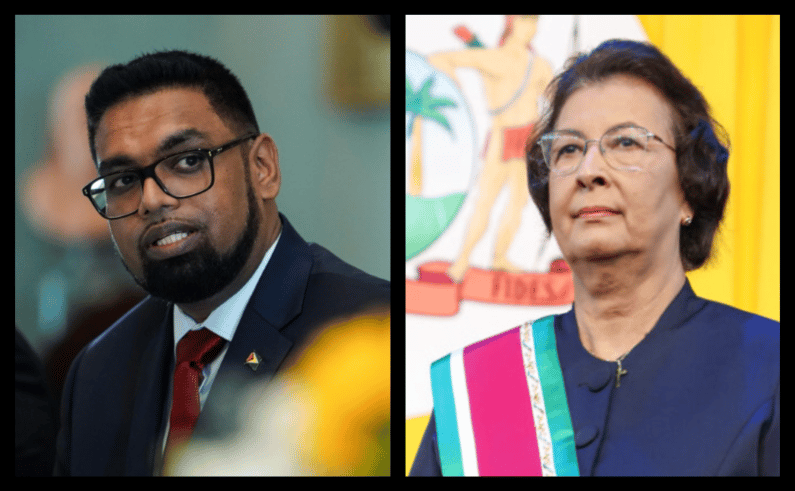
Irfaan Ali announced that Guyana has formally protested Suriname’s charges for using the Corentyne River.
The charges reportedly affect key sectors like timber and quarry operations, raising concerns about economic disruption.
Guyana warned that such measures could harm bilateral trade, business confidence, and long-standing cooperative relations.
Ali emphasized reciprocity, noting that Surinamese businesses operate freely in Guyana and urging Suriname to reconsider the charges.
The issue arises despite ongoing cooperation between the two countries, including plans to strengthen trade and develop oil and gas projects and a potential bridge.
Suriname responded that the levies are not new but based on existing laws and are applied equally to all vessels.
Suriname stated it had already attempted diplomatic communication with Guyana earlier in 2026 but received no formal response.
Both sides expressed a preference for dialogue, with Suriname highlighting that any exemptions—like the past one for Guyana Sugar Corporation—must be formally requested through diplomatic channels.