- De Brief
- Posts
- ⛏️ Illegal gold mining major challenge for the government
⛏️ Illegal gold mining major challenge for the government
and Parliament aiming to introduce new legislation

De Brief
December 15, 2025
Happy Monday!
This week the government faces the challenges of the illegal gold mining sector in Suriname, Parliament postpones State Budget debates in favor of proposing new laws, and the President deems debt restructuring necessary
Tackling illegal gold mining in Brownsberg a major challenge for the government
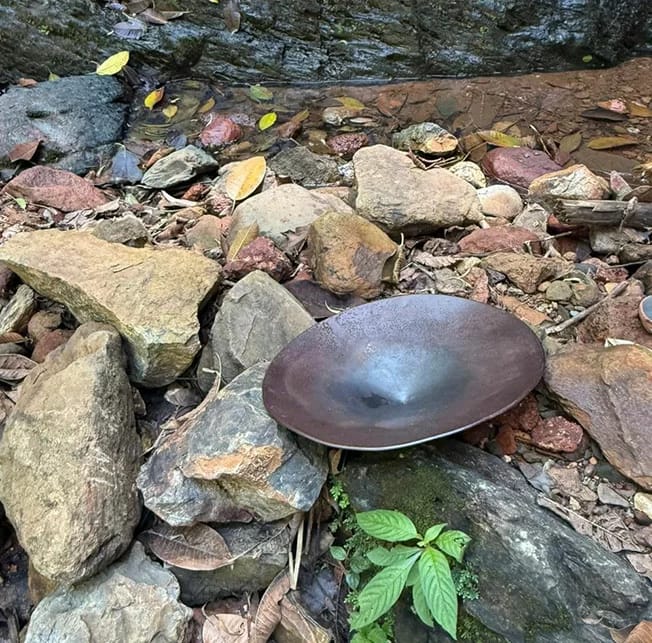
The Suriname Hospitality and Tourism Association (SHATA) warns that increasing (often illegal) gold mining is causing severe environmental damage to Brownsberg Nature Park, a key international tourism and conservation area.
What started as concerns about poor maintenance has escalated into a crisis, with mining activity at Witikreek, Irenevallen, and Leoval causing deforestation, erosion, and intimidation of guides.
Representatives of the tourism sector have urged the government to intervene immediately to prevent irreversible damage to the park.
SHATA stresses that Suriname’s nature still only needs protection rather than restoration, making Brownsberg’s conservation especially urgent as healthy ecosystems grow scarcer.
Despite repeated warnings from NGOs, tour operators, guides, and citizens, effective enforcement and protection have so far been inadequate.
SHATA calls for strict enforcement against illegal mining, permanent security presence, a sustainable management plan, restored infrastructure, stronger collaboration, and professionalization of STINASU.
The association believes the situation is still reversible and that strong government action could restore and reposition Brownsberg as a top nature reserve.
President Jennifer Simons acknowledged the seriousness of illegal mining in Brownsberg, noting that offenders often believe they are above the law and that the issue has persisted for over twenty years.
She supports regulating gold mining outside the park, while emphasizing the need for order, increased state revenue, and stopping deforestation caused by both small- and large-scale miners.
The Minister of Natural Resources reported recent enforcement actions, seizure of illegal equipment, and ongoing discussions to establish a permanent security presence in the park.
A new Sustainable Nature Management bill seeks to modernize outdated 1954 legislation, address rising deforestation—mainly driven by mining—and balance conservation with economic use of nature.
The proposed law emphasizes sustainable management, stronger enforcement, community and indigenous participation through FPIC, and aims to link biodiversity protection with long-term economic development.
Simons: debt restructuring necessary to ensure financial stability

President Jennifer Simons warned that without intervention Suriname would face unsustainable foreign debt payments within a few years.
Debt restructuring was described as a necessity, not a policy choice, due to heavy interest obligations starting in 2027.
Existing agreements would have required around USD 150 million in annual interest payments, threatening the national budget and exchange rate.
Negotiations with Staatsolie, TotalEnergies, Bank of America, and others deferred repayments to after 2028, easing foreign-exchange pressure.
The restructuring aims to prevent future revenues from being prematurely tied up in debt servicing.
Full repayment of the Value Recovery Instrument means oil royalties will be fully available to Suriname from 2028.
The government plans to use these revenues to strengthen public finances and is also negotiating with China to better align debt payments with capacity.
Alongside restructuring, tax administration reform and privatization are underway to boost revenues, reduce deficits, and support long-term financial stability.
Parliament postpone State Budget discussion to next year; introduce new legislation

Parliamentary committees decided that the 2026 State Budget will not be debated in December, pending amendments to the budget and the revised National Debt Plan.
Finance Minister Adelien Wijnerman reported that a restructuring of the Tax and Customs Administration uncovered irregularities and backlogs affecting tax revenue projections.
Adjustments to revenue estimates have been agreed upon, and budget changes were discussed with President Jennifer Simons.
Budget reallocations mainly affect education, agriculture, and tourism, while goods and services expenditures remain unchanged.
Contributions to international organizations and elements of the National Debt Plan are also under review.
Lawmakers concluded that debate must wait until the amended budget and debt plan are formally submitted.
Members Ebu Jones and Ivanildo Plein introduced the “Kaalplukwet” (OWVV), aimed at fully confiscating illegally obtained assets from convicted persons.
The bill targets organized crime, corruption, money laundering, drug trafficking, and modern financial crimes, including those involving cryptocurrencies.
OWVV allows confiscation of direct and indirect criminal proceeds, even if hidden in complex structures or registered in others’ names.
The law introduces asset-discrepancy rules, value-based seizure, and limited breaches of banking and professional secrecy under judicial oversight.
The coalition also proposed amendments to the Judiciary’s Legal Status Act, restoring constitutional consultation in appointing the Attorney General.
The retirement age for the Attorney General and other Public Prosecution Service members would be lowered to 65 to restore institutional balance.
President Simons publicly expressed support for all coalition-backed legislative initiatives.
A separate coalition bill proposes a complete ban on online and digital gambling to protect citizens and curb addiction, fraud, and money laundering.
The gambling ban includes strict enforcement, ISP blocking, financial transaction bans, heavy fines, and prison sentences, aligning Suriname with international anti–money laundering standards.