- De Brief
- Posts
- Impact of war on Surinamese economy
Impact of war on Surinamese economy
and Surinamese investment on regional healthcare

De Brief
March 15, 2026
Happy Monday!
This week, we cover the impact of the Middle East war on Suriname’s economy, investments in healthcare, and regional news covering US pressure for Cuban doctors to leave countries in the region.
War in the Middle East and impacts on the Surinamese economy.
President Jennifer Simons announced that the Surinamese government will accelerate social support measures to reduce the economic impact of the Middle East war on Suriname.
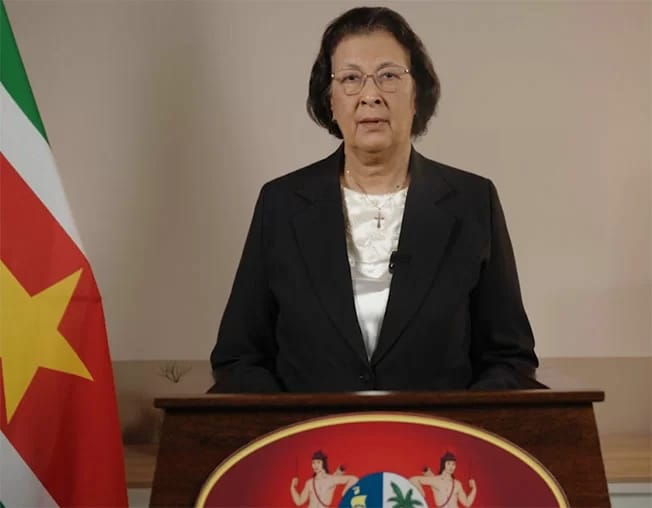
She warned that global conflicts can directly affect Suriname’s economy, especially through international markets and prices.
The president expressed hope that the conflict ends soon because longer wars lead to greater economic consequences worldwide.
The government held broad consultations with national stakeholders to assess the situation.
Political consultations were also held with coalition leaders and opposition parties.
The government decided to implement previously planned social measures earlier than scheduled to support citizens facing economic pressure.
Child benefits will increase to SRD 250 starting at the end of March for both general recipients and government employees.
Vulnerable groups (people with disabilities, pensioners, and low-income households) will receive an extra SRD 1,000 allowance, while civil servants get SRD 1,500 and teachers SRD 2,500 in additional support.
High-income officials, including government leaders and senior state officials, are excluded, while the government also aims to increase state revenues to manage the economic impact.
Healthcare news
Surinamese government plans to invest in regional hospitals to improve healthcare access in the districts.

A major goal is to reduce pressure on the Academic Hospital in Paramaribo by treating more patients locally.
The government is investing in the Regional Hospital Wanica (RZW), Marwina Regional Hospital, and Atjoni Regional Hospital.
These hospitals are not yet financially self-sufficient, so the government will continue providing financial support and development assistance.
At RZW, the laboratory, pharmacy, and X-ray departments are outsourced to private company TMS Global, which the government wants to change.
The health minister believes these services should be managed by the hospital itself because they generate important revenue.
The government plans to renegotiate or terminate the contract with TMS Global, potentially with legal support if necessary.
Marwina Regional Hospital is being modernized with a €5 million loan from the French Development Agency (AFD).
Planned improvements there include two pediatricians, an optician, a diabetes clinic, and temporary support from French medical specialists.
The Atjoni Regional Hospital already has basic equipment and Cuban doctors, and the government wants it to treat more patients locally instead of sending them directly to Paramaribo, especially for people in southern regions like Sipaliwini and Brokopondo.
Regional news
Cuba is preparing to withdraw its medical brigade from Guyana after the Guyanese government changed how Cuban medical staff are paid, as the region comes under pressure from the United States.
Frank Anthony, Guyana’s health minister, said the program—running for almost 50 years—is likely ending.
Guyana decided that Cuban doctors and nurses should receive their full salaries directly, instead of most of the payments going to the Cuban government.
More than 200 Cuban doctors have been asked to prepare to leave the country.
Despite the policy change, Guyana says it is open to hiring Cuban doctors individually if they want to stay and work there.
The issue relates to long-standing criticism from the United States, which has described Cuban medical missions abroad as a form of forced labor.
Similar developments are happening in the region: Jamaica recently ended a long-term agreement with Cuba over direct payments to doctors.
In Honduras, Cuban doctors also left after the government suspended its agreement with Cuba over regulatory issues.
Other Caribbean countries—such as The Bahamas, Antigua and Barbuda, Dominica, and Saint Lucia—are reviewing how they pay Cuban medical personnel.
At the same time, diplomatic tensions are rising: Cuba closed its embassy in Quito after Ecuador expelled the Cuban ambassador, reflecting broader regional pressure and growing influence from the United States.